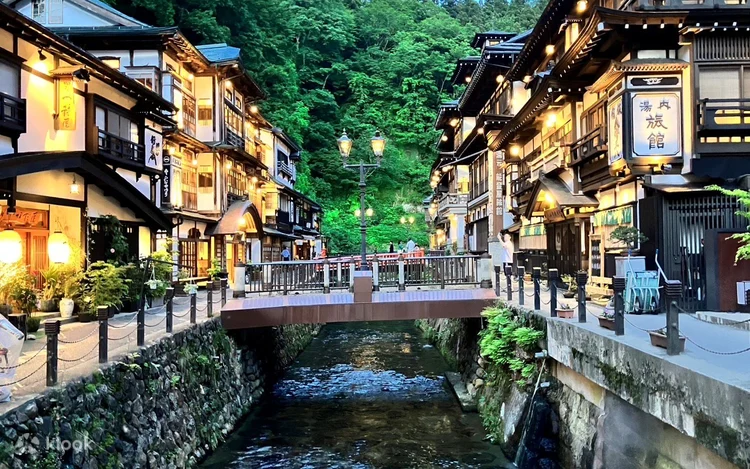
Best Time to Visit Ginzan Onsen — Snow Months and Weather
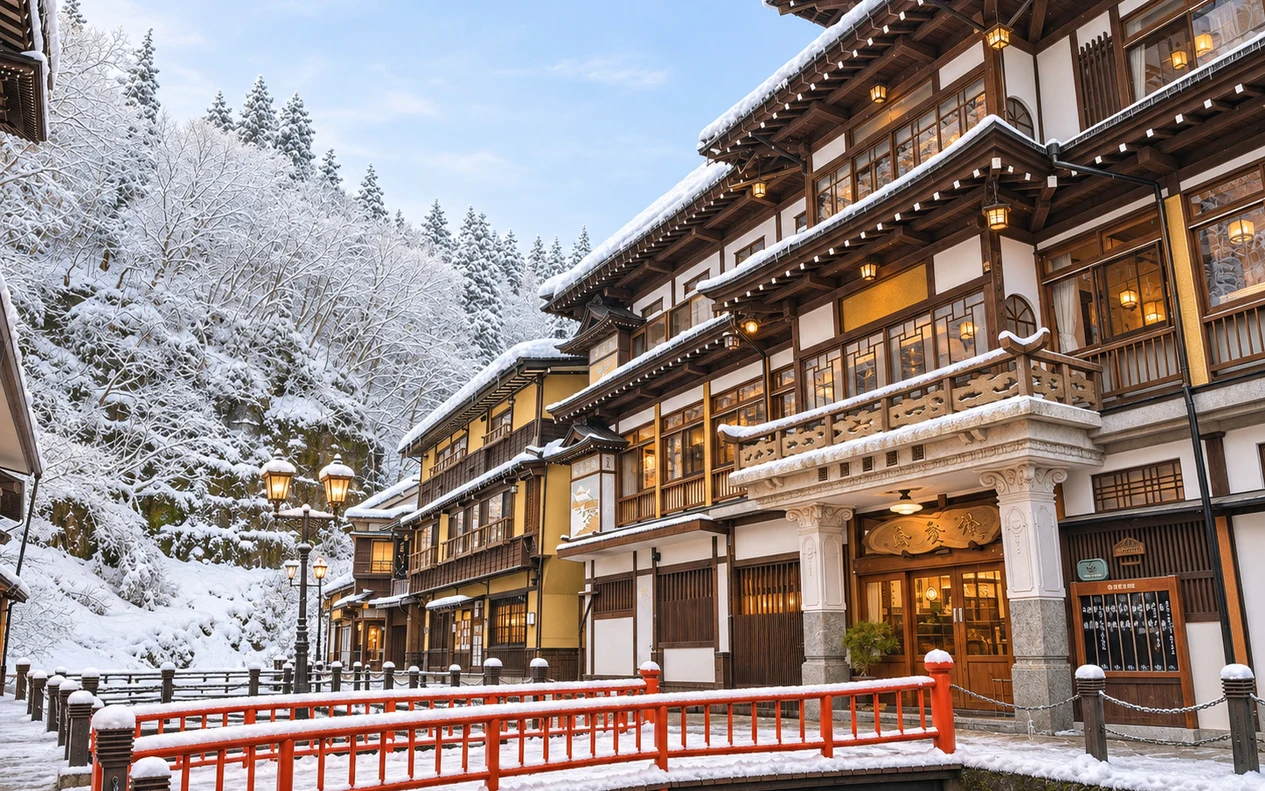
The best time to visit Ginzan Onsen is late January to mid-February for deep snow and lamps at dusk, on a weekday. Late October to early November is the best time without snow, for the autumn colours.
- late Jan – mid Febdeep snow and lamps
- late Oct – early Novautumn colour
- weekday morningsquietest
For the snow postcard, go from late January to mid-February: about 1.3–1.5 m of snow and sunset around 17:00. Avoid the New Year week and early February weekends if you can. Without snow, late October to early November brings the leaves; from late April to early November tours go to Okama crater instead.
- 149 cmFeb snowDeepest snow: February, about 149 cm normal depth.
- Dec–Marsnow monthsSnow months: December to March, with some in November and April.
- late OctleavesAutumn colours: late October to early November.
- morningsquietestQuietest: weekday mornings; busiest: lamp-lit evenings.
- mid Dectours startWinter tours run roughly mid December to mid March.
JMA normals 1991–2020, Obanazawa · NAOJ sunsets · tour pages · checked November 2026
When Is the Best Time to Visit Ginzan Onsen?
Late January to mid-February, on a weekday, for the deep snow and the lamps. It is the coldest and busiest stretch, so book early. If you would rather avoid snow and crowds, late October to early November gives autumn colour and an easy walk.
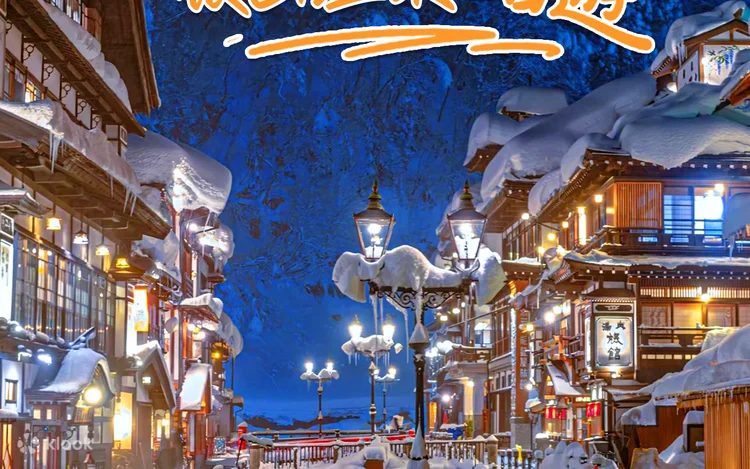
What Is Ginzan Onsen Like Month by Month?
Snow from December to March, a green valley from May, the wettest month in July, the warmest in August, colour in late October. Tap a month for its temperature, snow, sunset and which tours run. Mean temperatures run from -1 degree in January to 24 in August.
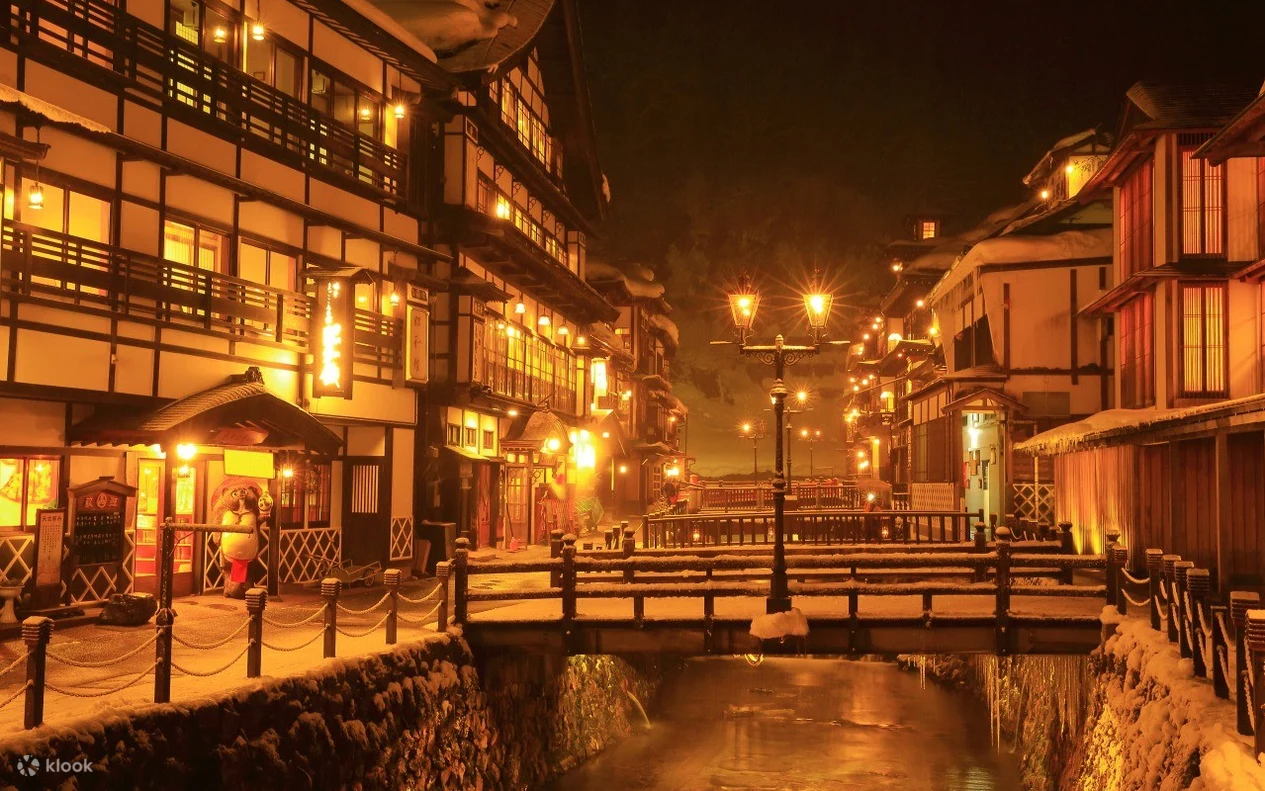
Snow at its deepest; lamps on the snow
- Mean high / low
- 1.7° / -4.1°
- Snow on the ground
- up to 129 cm
- Sunset, mid-month
- 16:42
Deepest snow of the year
- Mean high / low
- 2.7° / -4.3°
- Snow on the ground
- up to 149 cm
- Sunset, mid-month
- 17:16

Snow melting; winter rules end early March
- Mean high / low
- 6.4° / -2.1°
- Snow on the ground
- up to 114 cm
Last snow on the ground
- Mean high / low
- 14.0° / 2.8°
- Snow on the ground
- up to 30 cm
Green valley; the Zao road and Okama crater are open
- Mean high / low
- 20.4° / 9.3°
Rainy season starts
- Mean high / low
- 23.8° / 14.9°
The wettest month, 174 mm
- Mean high / low
- 26.9° / 19.1°
Warmest month; Hanagasa festival late August
- Mean high / low
- 28.4° / 19.9°
Mild, fewer visitors
- Mean high / low
- 24.5° / 15.5°
Autumn colour peaks late October
- Mean high / low
- 18.2° / 8.5°
First snow; autumn traffic control days
- Mean high / low
- 11.0° / 2.6°
- Snow on the ground
- up to 9 cm
Snow arrives; winter rules start late December
- Mean high / low
- 4.2° / -1.5°
- Snow on the ground
- up to 76 cm
- Sunset, mid-month
- 16:19
Source · JMA normals 1991–2020, Obanazawa; NAOJ sunsets for Yamagata · November 2026
When Does It Snow in Ginzan Onsen?
From late November to early April. The normal maximum depth is 9 cm in November, 76 in December, 129 in January, 149 in February, 114 in March and 30 in April. Early December can still be thin; March keeps deep snow but it is melting.
February, deepest snowSource · JMA, Obanazawa AMeDAS · November 2026 · record 256 cm, February 2018
What Is the Ginzan Onsen Weather in Each Season?
Winter: highs 2–7 degrees, lows to -4. Spring: highs 14–20. Summer: highs 24–28, the wettest months, cool nights. Autumn: highs fall from 25 to 11. Figures are 1991–2020 normals for Obanazawa. Snow lies from December to March, July is the wettest month and August the warmest.
冬Winter
highs 2–7°, lows to -4°Snow up to about 1.5 m, lamps on the snow, the car rules and the shuttle.
tours run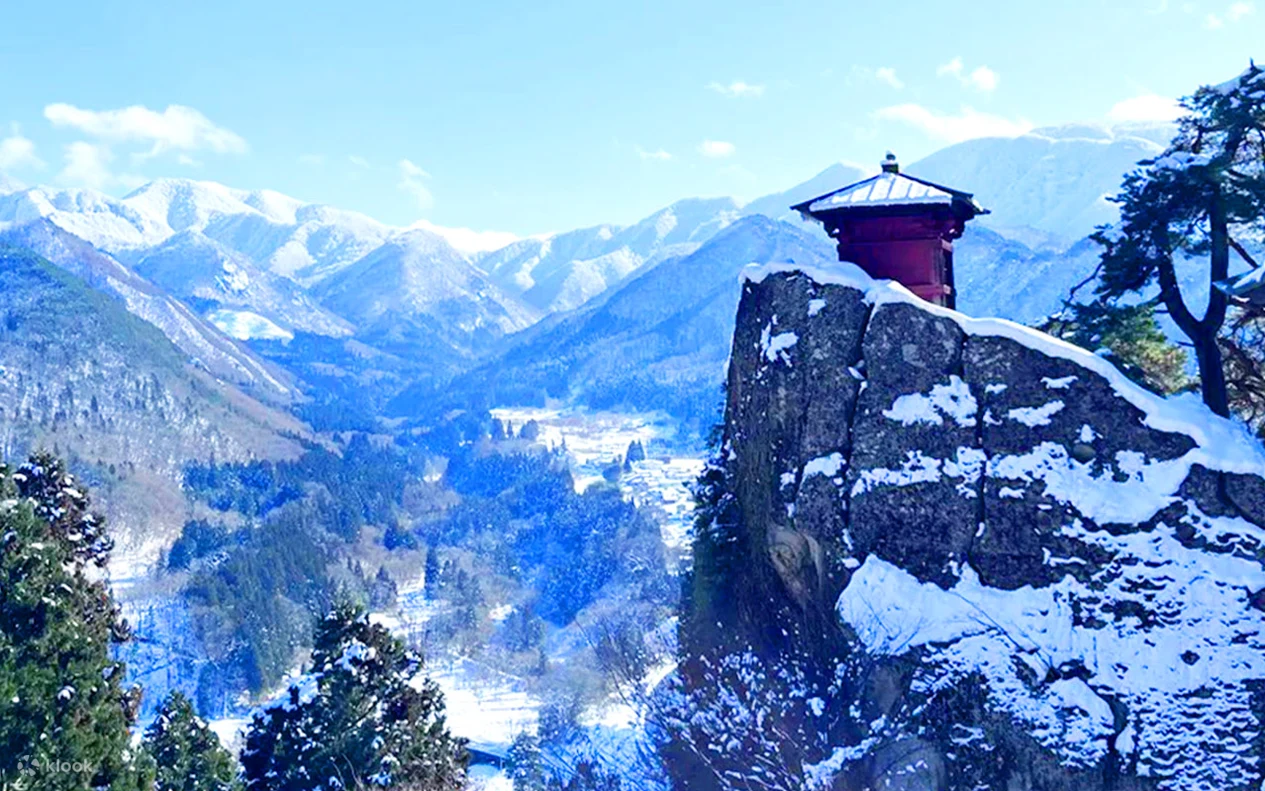 春
Spring
highs 14–20°Last snow in April, then a green valley; the mine trail reopens after the snow.
Okama tours from late April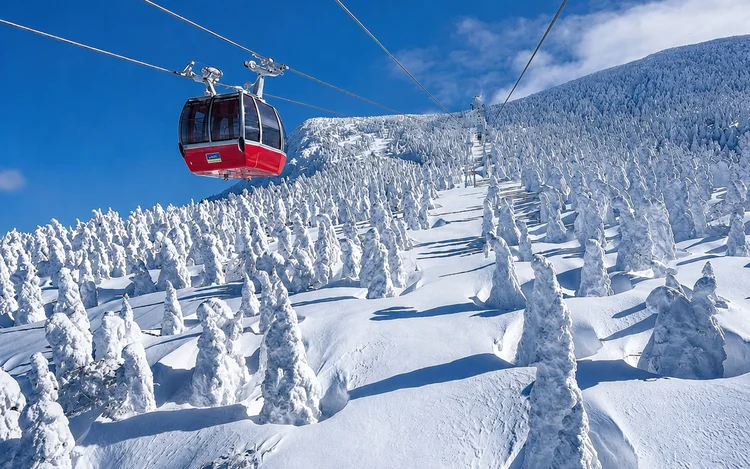 夏
Summer
highs 24–28°The wettest months; the Hanagasa festival from 27 August; cool mornings and nights.
Okama crater tours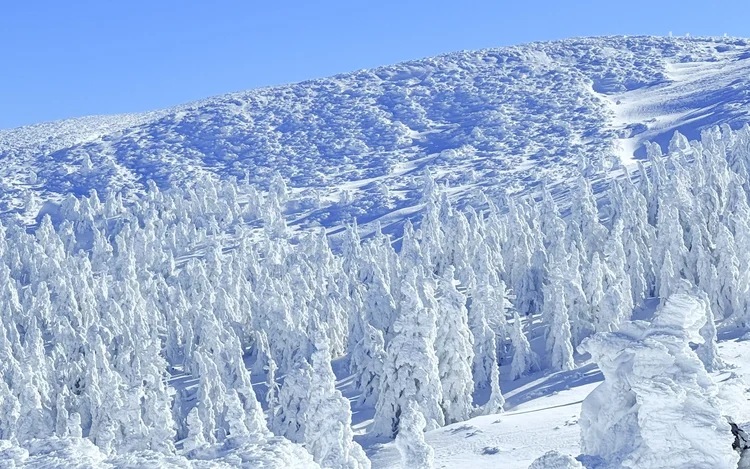 秋
Autumn
highs 25° → 11°Colours peak late October to early November; traffic-control days with a 500 yen shuttle.
Okama tours to early NovemberSource · JMA normals, Obanazawa; Obanazawa City; Ginzan Onsen association · November 2026 · spring and summer photos are stand-ins
Is Ginzan Onsen Worth Visiting in Autumn, Summer or Spring?
Yes, for a quieter visit. Autumn has the colours and fewer people; summer has green slopes, a loud waterfall after rain and the Hanagasa festival from 27 August; spring brings the last snow, then green. The mine trail reopens after the snow.
- AutumnColours from late October; fewer people; traffic-control days in November.
- SummerGreen slopes, a loud waterfall after rain, the Hanagasa festival from 27 August.
- SpringThe last snow in April, then green; the mine trail reopens.
- Okama crater tours
- late April – early November
What Time of Day and Day of the Week Are Quietest?
Weekday mornings are quietest; weekend and holiday evenings, when the lamps are lit, are the busiest. In winter the busiest stretches are the New Year week and early February, the quieter ones early January and early March. Tour buses arrive from late morning, so the first hours of the day are the calmest.
Source · Watabi forecast for winter 2026–27; Obanazawa City survey 2024–25: 43% of day visitors felt it was crowded · November 2026
Which Tours to Ginzan Onsen Run in Which Months?
Winter tours from Sendai and Tokyo and the Tendo twilight tour run from about mid December to mid March. Okama crater tours from Sendai run from late April to early November, while the Zao road is open. The private transfer from Oishida does not publish its months.
Source · tour pages, TENDO DAYS, Zao Echo Line opening dates · November 2026 · winter tours follow the snow, roughly mid December to mid March
All tours from SendaiWhen Is Ginzan Onsen Easiest to Book?
Outside January and February weekends. Main-street ryokan open their winter rooms months ahead and sell out about a year ahead; Ginzanso and Kosekiya Annex open bookings on the 1st of each month. Tours rarely sell out except on New Year and February weekends.
- RyokanMain street sells out about a year ahead; Ginzanso and Kosekiya Annex open on the 1st of each month.
- ToursRarely sell out except New Year and February weekends.
- The shuttleBook by 17:00 the day before.
Frequently Asked Questions
Is there snow in early December?
Usually some; the normal maximum for December is 76 cm, mostly later in the month.
Is there snow in March?
Yes, about 114 cm normal maximum, melting through the month.
Is it worth going without snow?
Yes, if you want quiet streets and the walk to the falls; it is the lamps on snow you miss.
When are the autumn leaves?
Late October to early November; in 2026 they peaked in early November.
When is it most crowded?
The New Year week and early February, especially in the evenings.
Are there cherry blossoms?
Not in the town itself as a sight; Lake Tokura, about 15 minutes by car from Oishida Station, has about 200 cherry trees and a festival in May.